

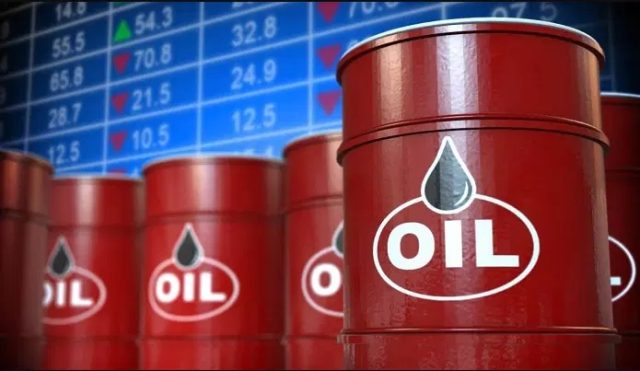
The global energy market is currently facing a period of intense volatility as geopolitical instability in the Middle East reaches a critical tipping point. Leading to an unprecedented surge in global oil prices.
Reports of escalating tensions involving Iran have sent immediate shockwaves through international oil benchmarks, leaving analysts concerned about long-term supply security.
Investors and global trade monitors are watching the situation with high anxiety, as any disruption in this region has a direct impact on the cost of living worldwide. The immediate reaction in crude futures suggests that the market is already pricing in a significant “risk premium” due to the uncertainty.
According to latest market data from Bloomberg Energy, Brent crude and West Texas Intermediate (WTI) have both seen sharp percentage increases in recent trading sessions. This surge is a direct response to the perceived threat of a blockade or military escalation in key transit corridors.
The primary concern for global oil prices remains the potential for a shutdown or slowdown of traffic through the Strait of Hormuz. As one of the world’s most vital maritime chokepoints, nearly a fifth of the world’s total oil consumption passes through this narrow waterway daily.
If Iran were to restrict access to this route, the global supply chain for energy would face a near-instantaneous bottleneck. Experts at Reuters Business suggest that such an event could push global oil prices well above the $100 per barrel mark within days.
For businesses and consumers, the impact of these surging global oil prices is felt most acutely at the gas pump and in the cost of manufactured goods. High energy costs act as a “hidden tax” on the global economy, often slowing down post-pandemic recovery efforts.
Logistics companies and airlines are particularly vulnerable to these price hikes, as fuel remains their largest operating expense. When global oil prices rise, the cost of shipping everything from electronics to fresh produce inevitably follows suit, fueling broader inflationary pressures.
Diplomatic efforts are currently underway to de-escalate the situation, but the market remains skeptical of a quick resolution. Traditional safe-haven assets, such as gold and certain stable currencies, are seeing increased inflows as a hedge against this geopolitical risk.
Strategic petroleum reserves in the United States and other major economies are being monitored closely as a potential buffer. However, these reserves are intended for short-term emergencies and cannot fully offset a prolonged disruption in Middle Eastern output.
The coming weeks will be a defining period for the global energy landscape as the world waits to see how Tehran and its neighbors respond to the mounting pressure. For now, the “wait and see” approach is dominating the trading floors from New York to London.
In addition to direct supply concerns, the psychological impact of these developments cannot be ignored. Speculative traders often push global oil prices higher during times of geopolitical unrest, creating a feedback loop of price increases
Central banks are also watching the situation with concern, as sustained high energy costs complicate the fight against inflation. If global oil prices remain elevated, it could lead to higher interest rates for a longer period of time.
This would be a significant blow to emerging markets, where energy costs represent a larger portion of the average household’s spending. For countries like Kenya, the ripple effect of rising global oil prices can lead to higher transportation and food costs.
Governments in these regions may be forced to increase fuel subsidies to protect their populations from the full impact of the price surge. However, such measures can strain national budgets and lead to increased public debt in the long run.
The role of OPEC+ will also be critical in the coming months as the group decides whether to increase production to stabilize the market. Their decisions will have a profound impact on the trajectory of global oil prices through 2026.
As the situation evolves, the importance of diversifying energy sources becomes even more apparent for long-term economic resilience. Countries that invest in renewable energy and domestic production are better shielded from these global shocks.
In conclusion, the surge in global oil prices is a stark reminder of how interconnected our modern economy remains with regional stability. Staying informed on these developments is crucial for any business leader or investor navigating the current market.
